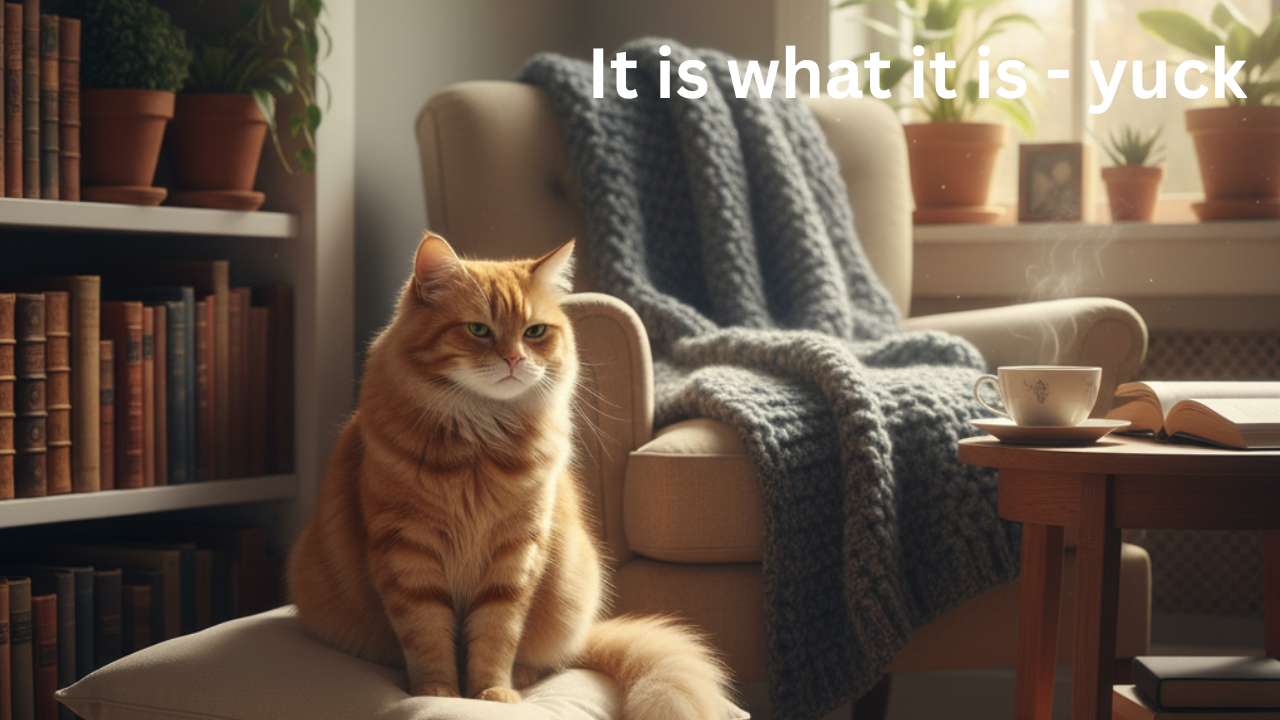
The Real Meaning of “It Is What It Is”
There’s a phrase I hear a lot — “it is what it is.” And every time, it makes me cringe. If you’ve ever wondered about the real meaning behind it, you’re not alone. It sounds simple, but underneath, it feels like a shrug — a way of giving up. And honestly? It’s so depressing.
I know people usually mean it as acceptance, but to me, it feels dismissive. It shuts down the chance to explore how something could change or what could be learned. It’s like saying, don’t bother. I don’t know about you, but I have enough BS in my life without this hopeless little statement popping up more and more.
The problem is, words shape the way we see the world. If we keep repeating “it is what it is,” we stop noticing the small things that could actually make a difference. And those small things are what matter. They give life meaning. They’re the foundation of a sanctuary: tiny daily choices that shift how we feel in our homes, our routines, our lives.
Instead of “it is what it is,” I prefer something that leaves space for possibility — something that carries more meaning, like “This is where I am, and I get to choose what’s next. Okay, maybe that’s more complicated than just tossing off the phrase-that-shall-not-be-named, but you get the idea. That mindset is gentler, but also more empowering. It acknowledges reality without closing the door on change.
Creating small sanctuaries is about refusing to live on autopilot. It’s about noticing when a phrase, a habit, or a mindset doesn’t serve you — and choosing a better one. The language you use every day is part of your sanctuary too.
So perhaps the next time someone says it and sets my teeth on edge, I’ll reply, “It is… until it isn’t.” Something less finite. Something that reminds us we can still bounce back. I’ve lived with depression for as long as I can remember — I don’t need the extra weight of “it is what it is.” If you’ve ever felt at rock bottom, that phrase can push you even lower. And right now, in this world, who needs that?
So what can we say instead?
The next chapter might surprise you.
There’s still more story to come.
We’re just between seasons.
I don’t know if these are perfect replacements, but I do know this: today, more than ever, we need language that gives us hope — not permission to give up.
Read about Daily Rituals for Calm and Focus